The $89 Device That's Making $400 Air Conditioners Pointless
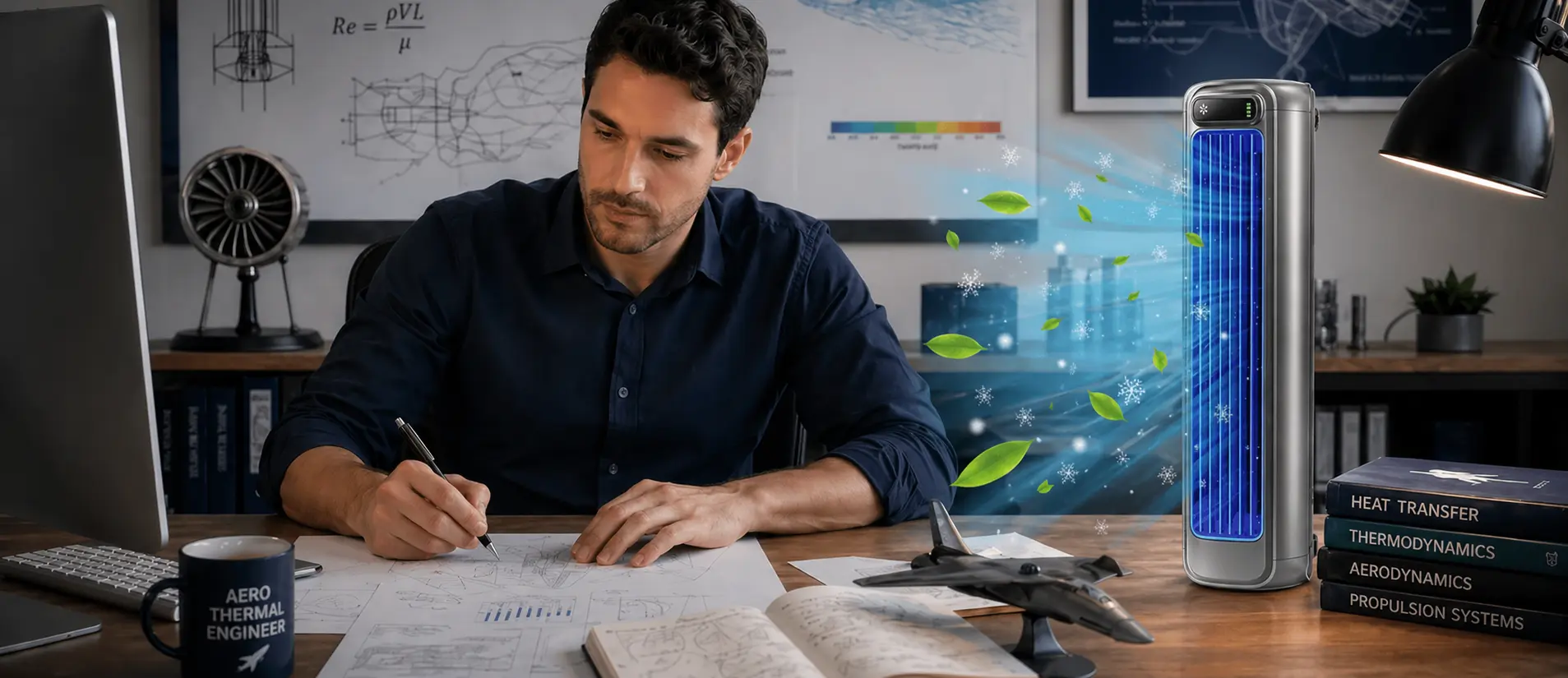
Thomas Berger, an aerospace thermal engineer from Phoenix, Arizona, spent a decade designing systems that keep satellite instruments from melting in orbit. When a power outage during a heatwave left his family sweltering past 90 degrees, he decided to build what the AC industry never would — a device that cools any room in minutes, for a fraction of the price.
by Sarah MitchellMaijs 18, 2026
Thomas Berger (54) of Phoenix, Arizona didn't set out to disrupt a $5 billion industry. He just wanted his family to be comfortable in their own home without paying a fortune for the privilege.
He'd looked at every option on the market. A new window unit. A portable AC. A call to the HVAC company. Each one the same answer — big upfront cost, bigger monthly bill, and the exact same problem waiting for him again next summer.
So he did what engineers do. He stopped looking at what was on the shelf and started thinking about what was actually possible.
"A window AC is a refrigerator turned sideways. The core technology hasn't changed since 1973 — and it can cool your room in two minutes if you build it right. The industry just never had a reason to."
The Problem Nobody in the Industry Wanted to Solve
Berger spent a decade designing thermal control systems for aerospace applications — the technology that keeps satellite instruments from melting in direct sunlight and freezing on the dark side of an orbit. He understood, at an engineering level most people never reach, exactly how heat moves and how efficiently it can be controlled.
What he found in the consumer AC market was an industry that had stopped trying. "A traditional window unit pulls 1,500 watts or more to cool a single room. The vast majority of that energy goes to running a compressor and circulating refrigerant through a cycle that was standardized fifty years ago. The technology to do far better has existed for decades." He pauses. "The industry just never had a financial incentive to use it."
AC manufacturers have spent fifty years convincing American homeowners that compressor-driven machines are the only way to produce real cooling. Every summer, the same overpriced units. Every summer, the same answer: this is just what it costs. Berger knew it didn't have to.
The Night That Changed Everything
When a power outage during a heatwave left his family sweltering with temperatures soaring past 90 degrees, Berger decided to stop waiting for the industry to fix itself and build the alternative himself.
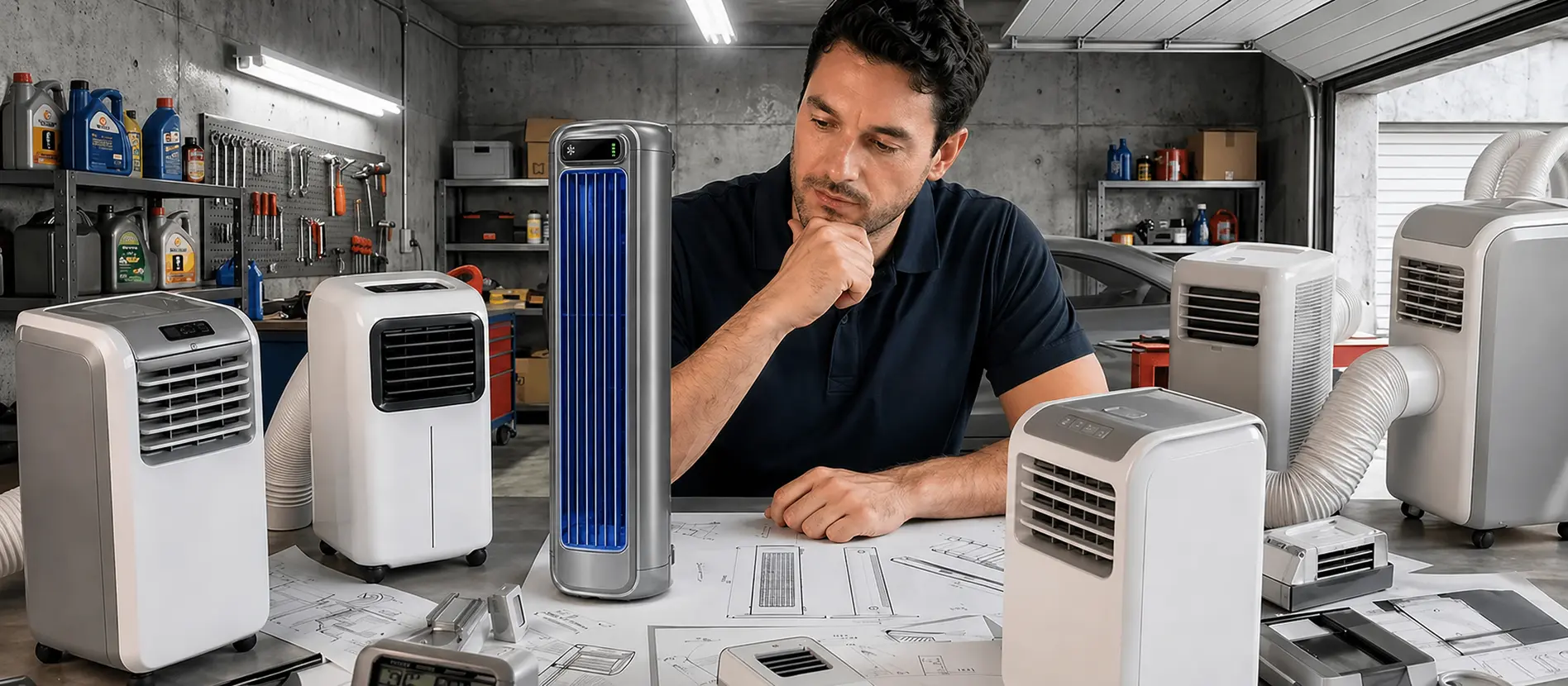
He spent the next several months prototyping in his garage — testing airflow geometries, chamber configurations, and cooling rates, applying the same thermal engineering principles he'd spent his career developing for far more demanding environments. What he eventually built had no business existing at the price it would sell for.
The Test That Stopped the Street
The first real-world test was Berger's own living room. Temperature: 93 degrees. He plugged in the prototype, pressed a single button, and watched the thermometer drop to 63 degrees in under two minutes.
He ran it four more times to be certain. Same result every time. Then he brought in his neighbor — a retired HVAC technician who had watched the whole project with polite skepticism for months. The neighbor stepped into the room, checked the thermometer, looked at the small device on the table, and said nothing for a long moment.
"He'd spent 35 years in the industry," Berger says. "He told me he'd never seen anything that size cool a room that fast. Then he asked how soon he could have one."
Within a week, six families on the street had borrowed the prototype. Within a month, Berger had more requests than he could fill. That prototype became BrizaAC.
What Makes It Different From Everything Else on the Market
BrizaAC is not a smaller version of a traditional air conditioner. Standard portable ACs take the same compressor-and-refrigerant architecture that's been in window units since the 1970s, shrink it into a box on wheels, and charge accordingly. They still draw over 1,000 watts. They still need a window vent. They still take 45 minutes to bring a room down to a livable temperature.
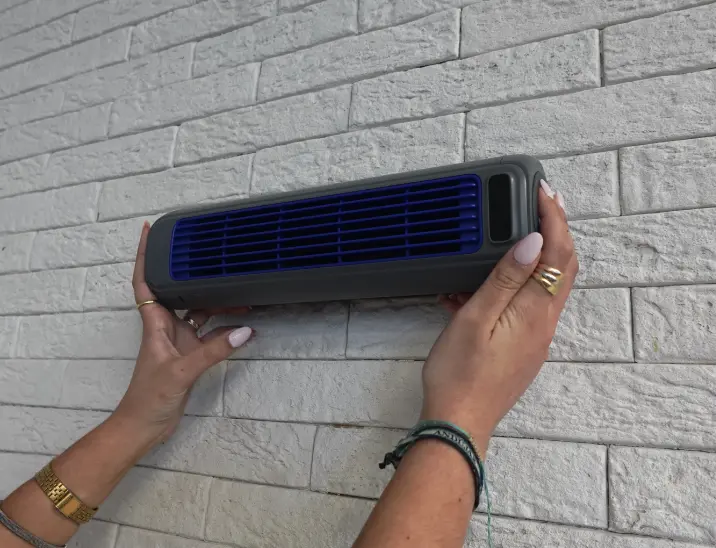
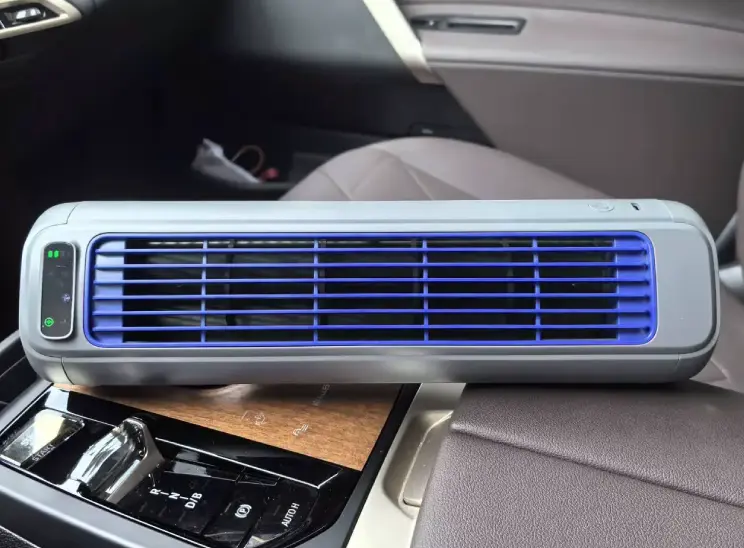
BrizaAC uses a patented airflow acceleration system derived from aerospace thermal engineering principles — the same approach Berger spent a decade applying to environments far more demanding than any living room. It pulls surrounding warm air into the unit, moves it through a precision-engineered internal cooling chamber, and delivers a concentrated stream of cold air directly into the room. No refrigerant. No compressor. No window kit. No tools. You plug it in, press a button, and the room drops 30 degrees in under two minutes.
Independent testing confirms it performs as effectively as a conventional window unit for everyday household cooling — while using up to 90% less electricity.
Why BrizaAC Is So Popular
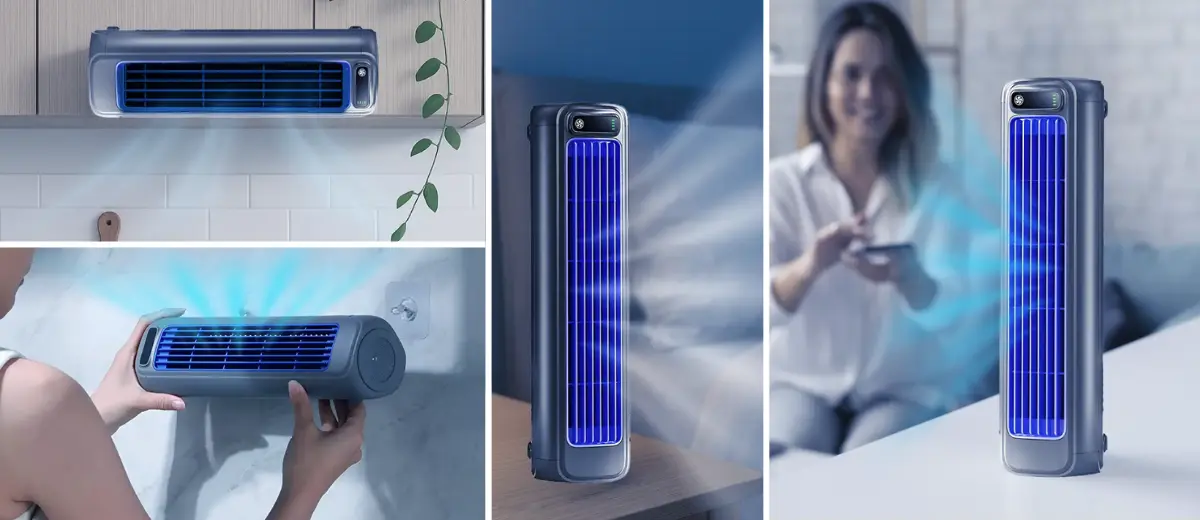
Cools any room from 93°F to 63°F in under 2 minutes — tested, repeatable, consistent Uses up to 90% less electricity than a window AC — runs for hours on minimal power consumption No installation, no tools, no window kit — plug in and press one button Whisper-quiet at under 40 decibels — quieter than a library, runs while you sleep Under two pounds — move it from the bedroom to the office to the RV without thinking twice Low power draw — keeps running on the hottest days when heavy AC units overload the grid
What Happens the First Time You Use It
Every BrizaAC owner describes the same moment. They point it at a room they've been losing to all summer — the bedroom they can't sleep in, the home office they've abandoned by noon, the living room the family has quietly stopped using. They press the button. They wait.
Within ninety seconds, they feel it on their skin before they even look at the thermometer.
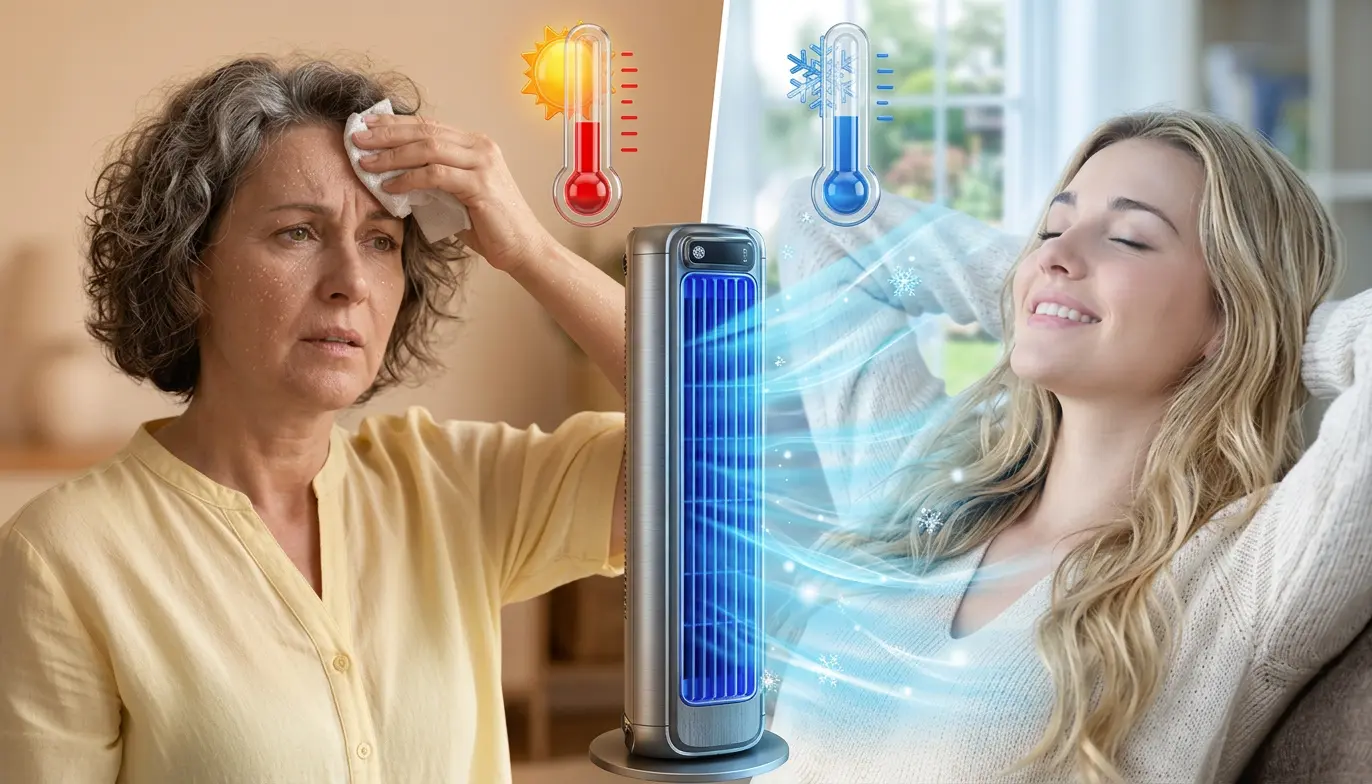
The sweating stops. Their shoulders drop. They stand there for a moment, just breathing, recalibrating what they thought real cooling required.
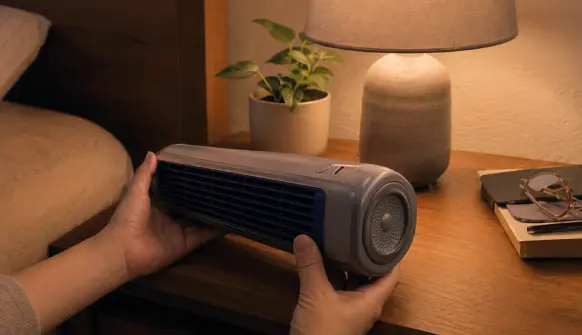
One user put it simply: "I set it on my nightstand at 10 PM. At 10:02 I reached for the blanket. I hadn't touched a blanket in six weeks. I just lay there thinking — why did I wait so long."
Who Is BrizaAC Ideal For?
BrizaAC was built for anyone who has ever spent a summer night unable to sleep in their own bedroom because the room won't cool down — and felt the quiet frustration of knowing that fixing it properly should not be this expensive. If that's you, this is what you've been waiting for.
From One Garage in Phoenix to 60,000 American Homes
BrizaAC has never been sold in a retail store, never listed on Amazon, and never run a television campaign. Every unit has moved through a single official website — driven almost entirely by word of mouth from people who couldn't stop telling their neighbors about it.
That matters for one reason: no retail margin, no distributor cut, no advertising budget buried in the sticker price. The major appliance brands who came looking were told no — because Berger knew exactly what the price would become the moment a retail chain got involved.
$89 is what it costs. Not what the market will bear.
⚠ Current Stock Alert
Approximately 3,200 units remain in the current production batch. Once sold out, the next delivery is a minimum of 8 weeks away — and the 50% launch discount will not be guaranteed on the next batch.
What American Homeowners Are Saying
Dave R. · Austin, TX
|
Rating: ⭐️⭐️⭐️⭐️⭐️
"I have a Frigidaire window unit I paid $340 for two years ago. Honest answer: the BrizaAC cools my bedroom just as well for everything except the absolute hottest afternoons. And I don't have to wait 45 minutes for the room to come down. The window unit is still there. The BrizaAC runs every night."
Karen M. · Phoenix, AZ
|
Rating: ⭐️⭐️⭐️⭐️⭐️
"I set it up in the living room on a Saturday. Sunday afternoon my neighbor came over, walked in, and asked if I'd finally fixed the central air. I hadn't — it's been broken since April. I showed her the BrizaAC. She looked at it for about ten seconds and ordered one on her phone before she left. She texted me Monday morning: first full night of sleep in three weeks."
Linda S. · Nashville, TN
|
Rating: ⭐️⭐️⭐️⭐️⭐️
"My father is 79 and lives alone. He refuses to run the central AC because of what it does to his bill — so every summer I worry about him. I bought him a BrizaAC mostly to have something running in his bedroom at night. He called me the next morning and said it was the coolest he'd slept in years. That phone call was worth more than anything I've bought in a long time."
Currently — 50% Launch Discount While Supplies Last
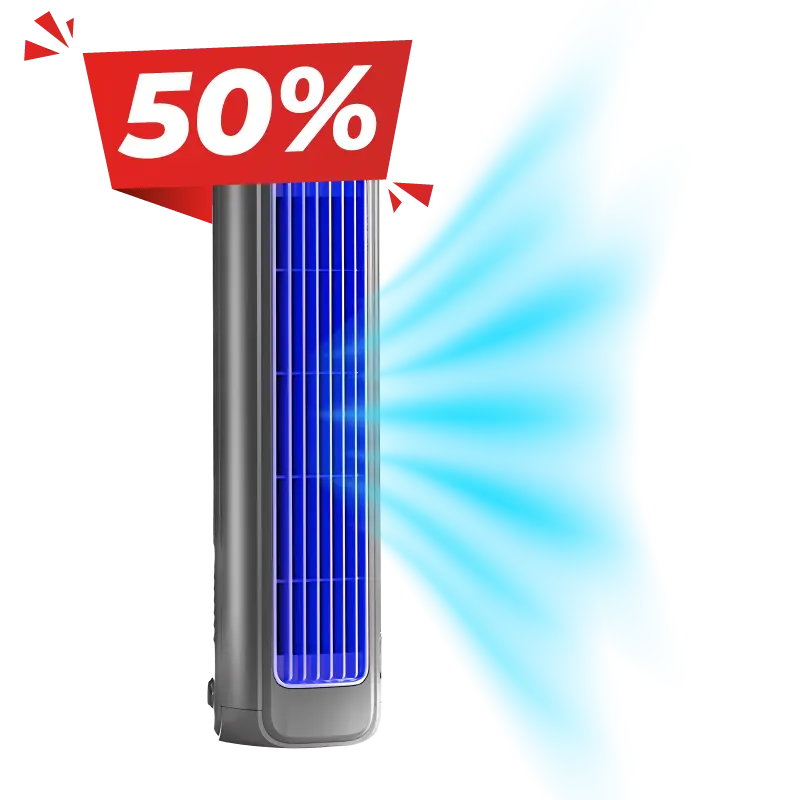
Anyone ordering now can get BrizaAC at an introductory price of less than $90 — nearly half the regular retail price. A limited-time offer built to generate word of mouth in new markets, and one that will not be guaranteed past the current production batch.
With heatwaves arriving earlier and hitting harder every year, the idea that staying cool in your own home should cost $400 upfront and another $300 every month is one more thing families across the country are done accepting. BrizaAC is the alternative the AC industry spent fifty years hoping nobody would build.
So if you're done sweating through another summer in rooms that should be cool —
UPDATE
Demand for BrizaAC has surged dramatically over the past two weeks and inventory is moving faster than anticipated. Order yours at 50% OFF before this batch sells out.
UPDATE: The demand for this product has increased dramatically and inventory has been flying off the shelves. Order your own for 50% OFF before it's too late.
Lock in your order while you can to get 50% OFF
NOTE: This deal is NOT available on Amazon or eBay.
90 Day Money Back Guarantee
Insured & Fast Shipping
Guaranteed Safe & Secure Checkout
No-Hassle Returns
Comments
James Walker
"Perfect for my home office. It’s quiet, compact, and cools my space surprisingly fast. I use it every afternoon and it makes a noticeable difference."
like·reply·23 min
Emily Carter
"Really impressed with this. It cools my room quickly and doesn’t make any distracting noise. I can keep it on while working or sleeping with no problem."
like·reply·42 min
Daniel Hughes
"I use it every night now. It’s quiet, effective, and helps me sleep much better. I don’t wake up sweating anymore, which is a huge plus."
like·reply·57 min
Sarah Mitchell
"Small but powerful. I keep it on my desk and it keeps me cool during the hottest hours of the day. Super easy to use too."
like·reply·1 h
Michael Turner
"Didn’t expect much at first, but it actually works really well. It’s lightweight, easy to move, and perfect for cooling a specific area."
like·reply·2 h
Olivia Bennett
"Very easy to use and really convenient. I move it between rooms depending on where I need it, and it always does a great job."
like·reply·2 h
Thomas Reed
"Great for small spaces. I use it in my bedroom and it cools the area enough to stay comfortable all night."
like·reply·2 h
Laura Collins
"Quiet and effective. It doesn’t take up much space and makes a big difference during hot days. Really happy with it."
like·reply·3 h
Andrew Scott
"I keep it on my bedside table and it’s been a game changer. Quiet enough to sleep with and powerful enough to keep me cool."
like·reply·3 h
Hannah Price
"Super easy to set up and use. I noticed the difference within minutes of turning it on. Great for warm days at home."
like·reply·4 h
Ryan Foster
"I use it in my office during long work hours. It keeps me comfortable without any noise or hassle."
like·reply·4 h
Chloe Adams
"Compact and stylish. Fits perfectly on my desk and actually cools better than I expected."
like·reply·5 h
Matthew Brooks
"Took it with me on a trip and ended up using it every day. Lightweight and very practical."
like·reply·5 h
Sophie Turner
"I was skeptical, but it really works. Keeps my room cool without the noise of a traditional fan."
like·reply·6 h
Jack Bennett
"Great little device. Easy to move around and perfect for cooling down quickly."
like·reply·6 h
Emma Richardson
"I use it in different rooms depending on the day. Very convenient and does exactly what I need."
Disclaimer: This website is an advertisement and not a news publication. This product is not intended to diagnose, treat, cure or prevent any disease or health condition. The information provided in this document should not be considered a substitute for the advice of a physician or other healthcare professional. This product is not for medical use. They can be useful in certain high-risk situations, never as a substitute. As each individual is different, results may vary.












Comments